Routes Setup
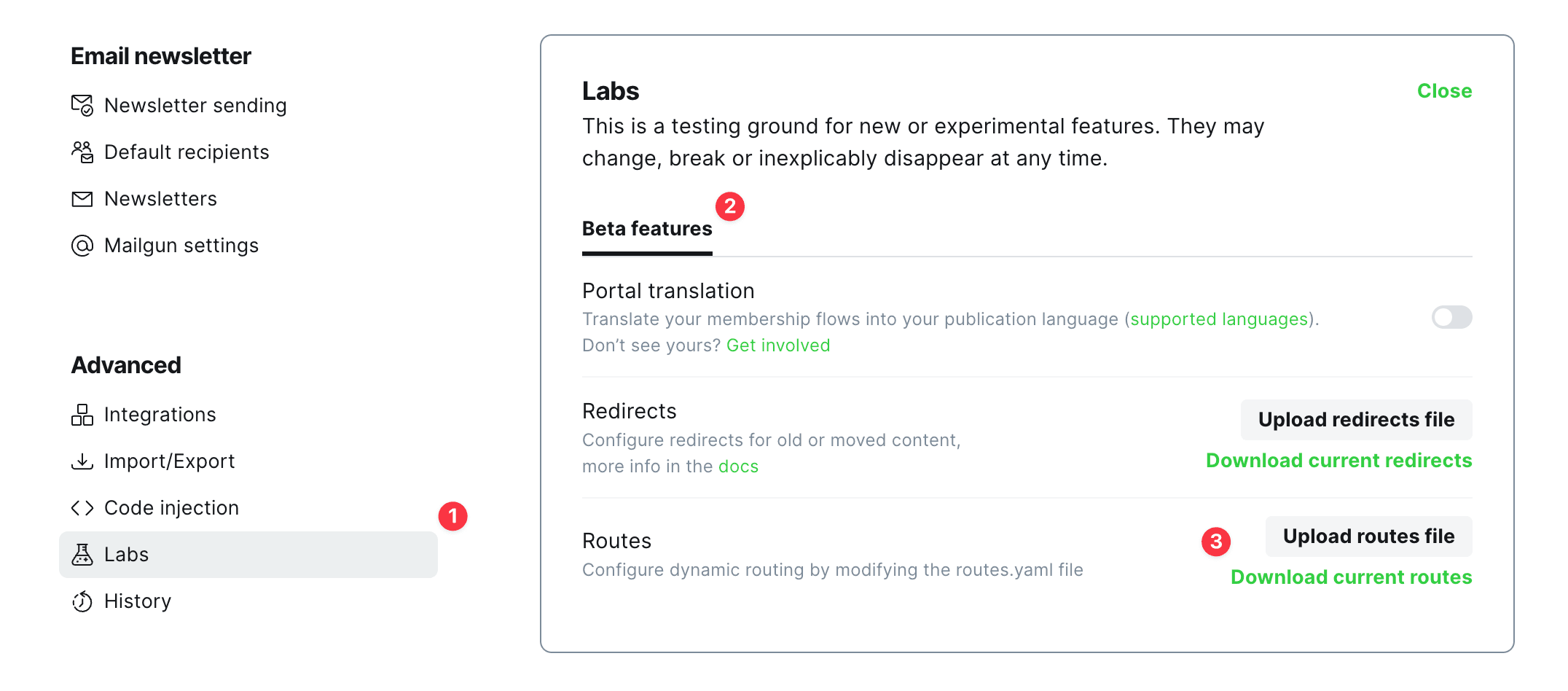
To upload the routes.yaml follow these steps:
- Unzip the scope.zip theme file
- Go to Settings → Advanced → Labs
- Click Open → Beta features
- Under Routes section, click Upload routes file button
- Select and upload the
routes.yamlfile from the theme folder
Note: upload routes.yaml after uploading the theme zip.
There will already be a default routes.yaml file uploaded to Ghost. You must upload your theme’s routes.yaml to override the default.
Do this separately after uploading your theme zip file.
Available Routes Files
Scope comes with multiple routes configuration files:
Default Routes (routes.yaml)
The standard configuration for a simple blog setup:
routes:

collections:
  /:
    permalink: /{slug}/
    template: index

taxonomies:
  tag: /tag/{slug}/
  author: /author/{slug}/
Landing Page Routes (routes-landing.yaml)
Use this configuration to enable the landing page feature:
routes:
  /:
    template: landing
  /home/:
    template: home

collections:
  /blog/:
    permalink: /{slug}/
    template: blog

taxonomies:
  tag: /tag/{slug}/
  author: /author/{slug}/
Important: When using the landing page routes, your blog posts will be available at /blog/ instead of the root URL.
Enabling the Landing Page
To enable the landing page feature:
- Rename
routes-landing.yamltoroutes.yaml(or copy its contents) - Upload the file to Ghost as described above
- Create landing sections by following the Landing Page documentation
Custom Pages Data
Our theme provides a few custom pages. However, to modify the page title, image, excerpt, and content, you need to activate the data property. To do so, you must remove the # symbol in front of the data property in the routes.yaml file. Then, create the page with the correct slug that you wish to control.
Important: If you do not uncomment the data property in routes.yaml and upload the file to Ghost, the custom page will not use your page title, feature image, or excerpt. It will use the default theme settings.